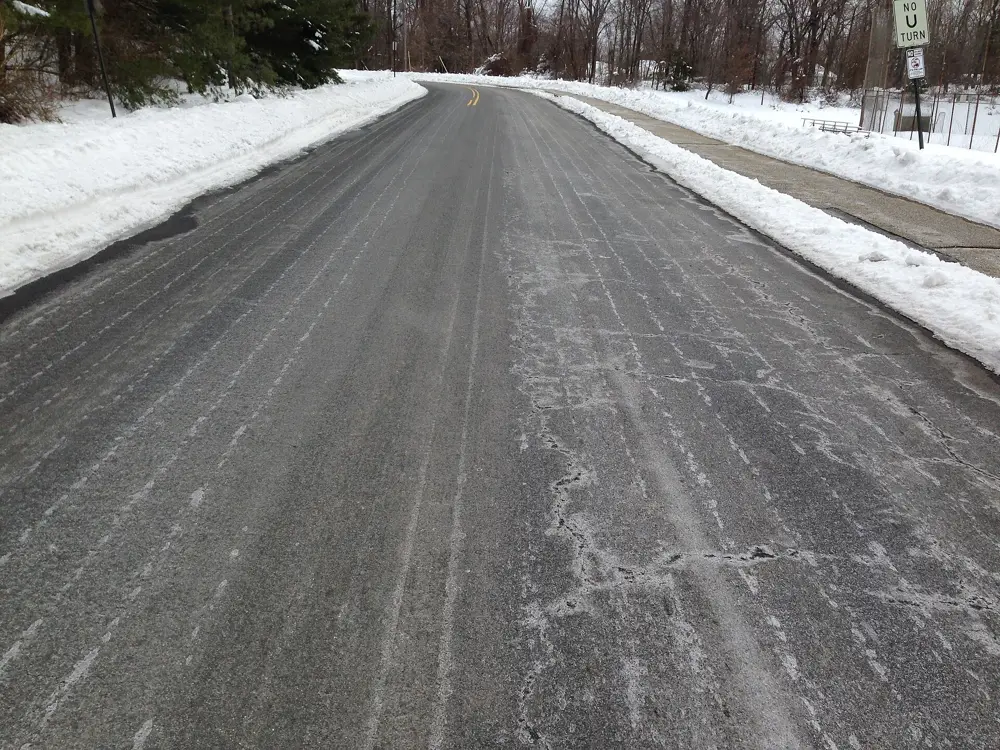
How the Damage Happens
Concrete is porous. Salty meltwater soaks into the top layer. When it freezes, expands and thaws again, and the salt crystallizes in the pores, the surface can start to flake. This is called scaling. Deeper chunks breaking away are spalling. Salt can also reach steel reinforcement through cracks and cause it to rust.
Signs to Look For
- A rough, flaky surface where the car tires stop
- Small pits or exposed aggregate
- White residue that comes back after you wash it
- Cracks spreading from areas that stay wet
Habits That Help, Coated or Not
- Squeegee meltwater toward the door or drain after storms.
- Rinse salty slush off the floor on warmer days.
- Use containment mats under the car if you don’t coat.
- Avoid de-icers on the garage floor itself unless the product says it is safe for concrete.
How a Coating Helps
A continuous, well-bonded coating keeps brine on the surface, where you can squeegee it away, instead of letting it soak into the concrete. Flake systems add texture so the floor is less slippery when wet. A coating cannot fix existing structural damage, so scaled or spalled areas need to be repaired first (see prep).
Slip Resistance
A wet glossy floor can be slippery. Ask about flake density or an anti-slip additive in the topcoat, especially where you walk from the car to the house.
Already Damaged?
Light scaling can be ground and filled before coating. Widespread damage may call for resurfacing, which HomeGuide prices at $3–$7 per square foot (HomeGuide). Have an installer look before you decide.
Request a Garage Floor Coating Quote
Two quick questions. An independent coating company that works in your area will contact you to look at the slab and quote it.
Please note: Sioux Falls Garage Floor Coatings refers homeowners to independent coating installers. We are not a contractor.